Guide
What is
Styrian Pumpkin Seed Oil?
Styrian pumpkin seed oil is a roasted, cold-pressed oil from hull-less Styrian oil pumpkins — dark green, intensely nutty, and made to finish food rather than fry it.
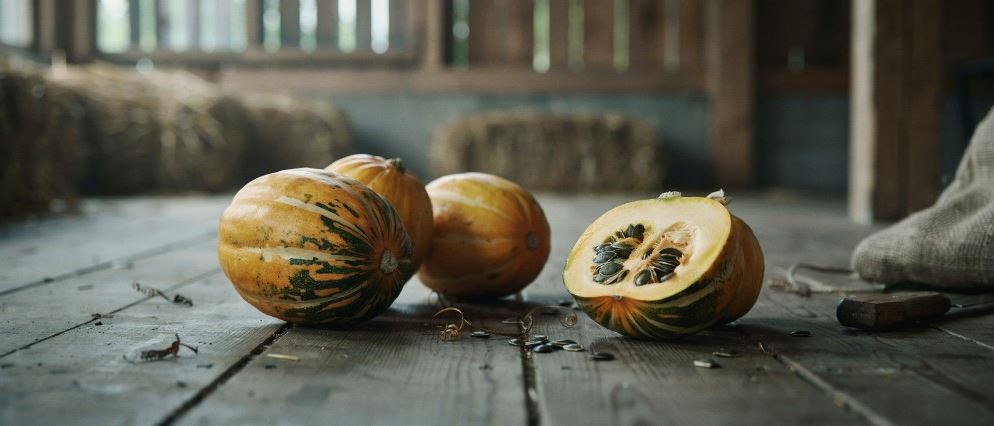
In Styria (Steiermark), Austria, “pumpkin seed oil” means oil from a special hull-less oil pumpkin grown for its dark green seeds. The seeds are roasted, then pressed. That roasting step is why the aroma runs so much deeper than pale seed oils on a supermarket shelf.
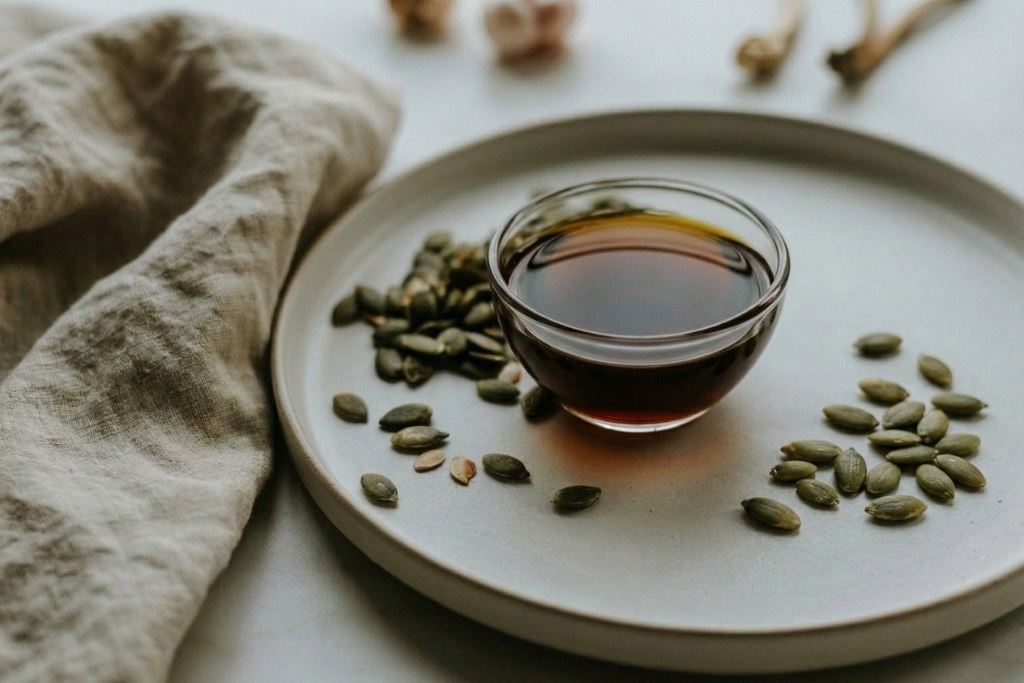
You recognise authentic Styrian-style oil by colour and scent first: nearly black in the bottle, deep green as a thin film, with a clean roasted-seed aroma. How origin is protected on the label is covered under quality and origin; kitchen habits live in how to use.
How
Styrian Pumpkin Seed Oil Tastes
Expect roasted nut notes — toasted seeds, a gentle bitterness that keeps the flavour interesting. A little goes a long way. If a dish tastes only of oil, you used too much.
Fresh oil smells clean and roasted. Flat, paint-like, or rancid notes usually mean the bottle is old, poorly stored, or left open in warm light. Buy smaller bottles if you cook with it rarely, and finish an open bottle while the aroma still sings.
Why
Styrian Pumpkin Seed Oil Looks Almost Black-Green
In a thick layer the oil can look nearly black. On a white plate, or as a thin film, it flashes deep green. That colour comes from roasted Styrian oil-pumpkin seeds — it is not a dye and it is not a defect.
Pale yellow “pumpkin” oils you may see elsewhere are a different product. True Styrian-style oil should read as dark and green-tinged, with a roasted aroma you notice as soon as the bottle opens.
Why You Do Not Fry With
Styrian Pumpkin Seed Oil
It is built to finish a dish, not survive a hot pan. High heat wastes the aroma and can turn the flavour harsh — so cook with a neutral oil, then add Styrian pumpkin seed oil off the heat.
- Salads and raw vegetables
- Soups and purees as a final drizzle
- Eggs, soft cheese, warm potatoes
- Bread tasting with a pinch of salt
Timing, storage, and common mistakes are covered in how to use.
Choose a Good Bottle —
Then Cook With It
Learn what origin and quality cues to trust in quality and origin, then put a spoonful to work with how to use or the recipes.